Chuck Eye Steak (Poor Man’s Ribeye)
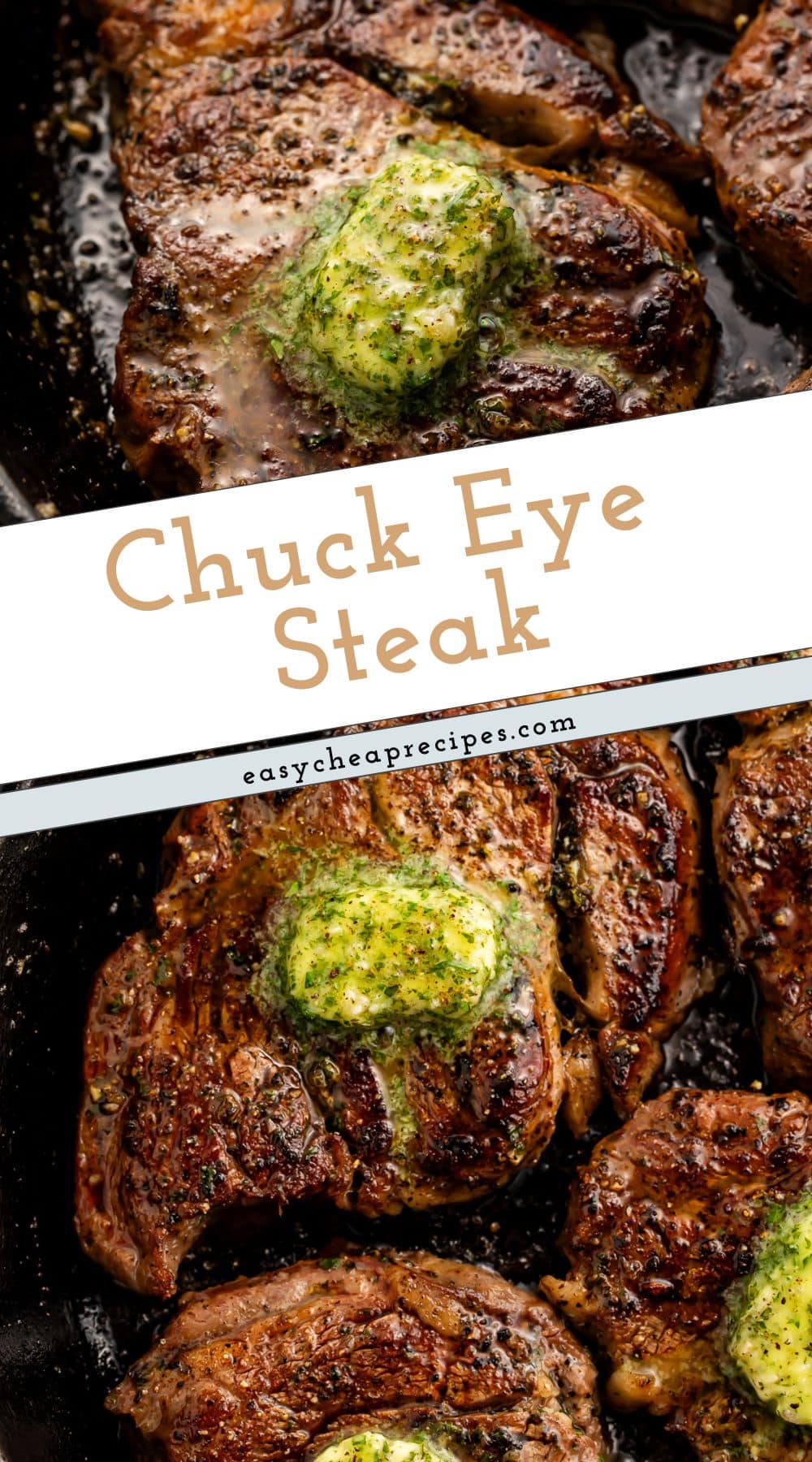
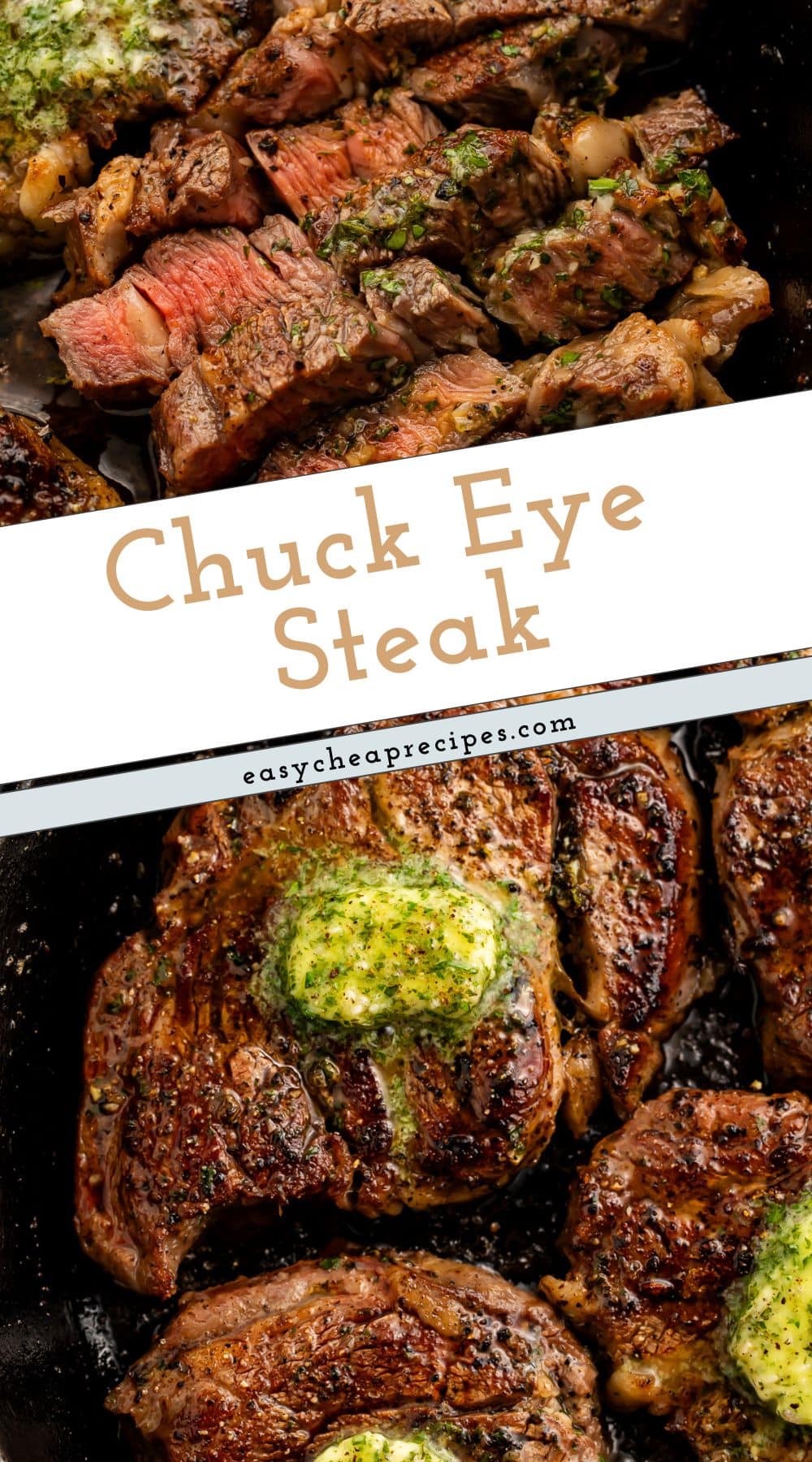
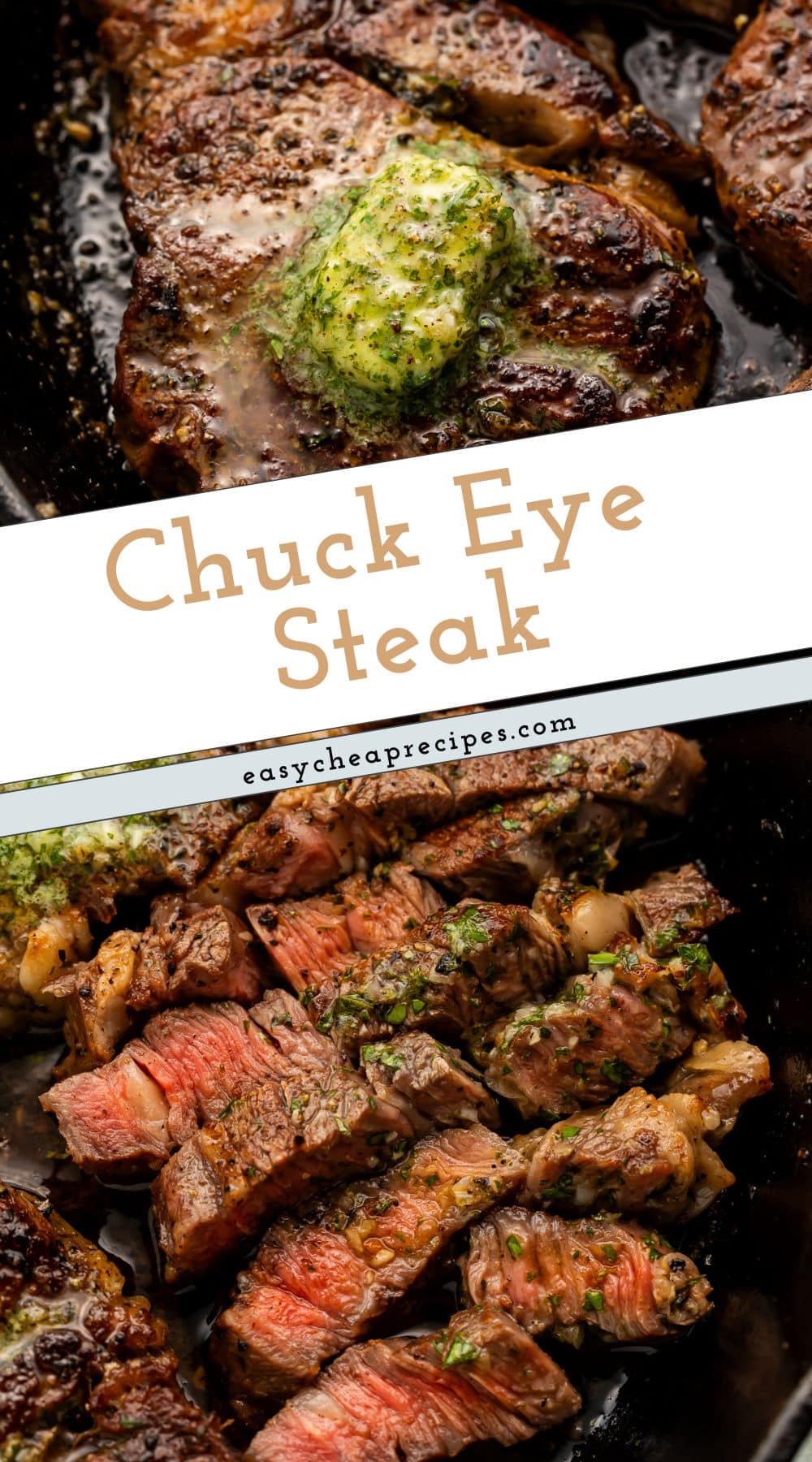
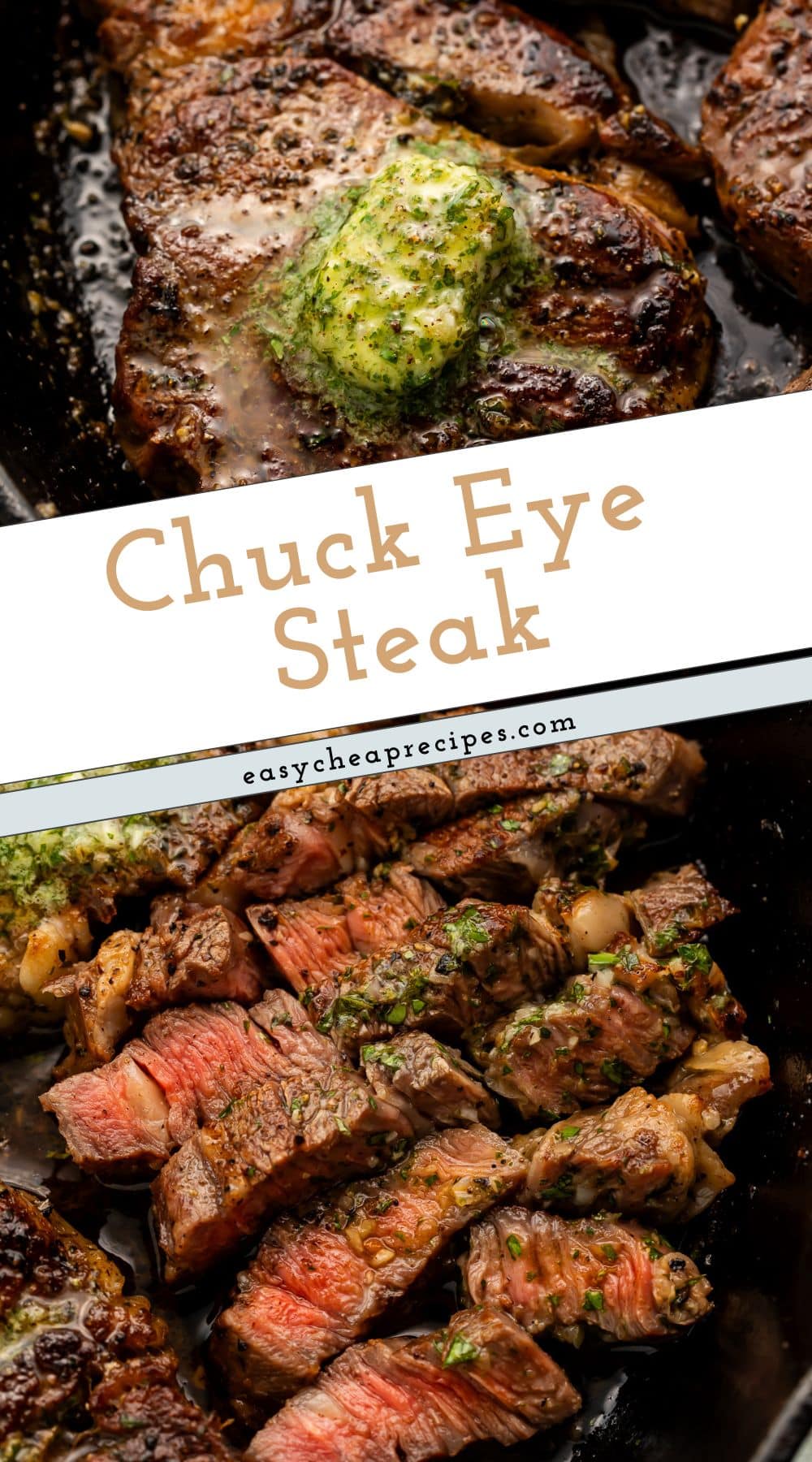
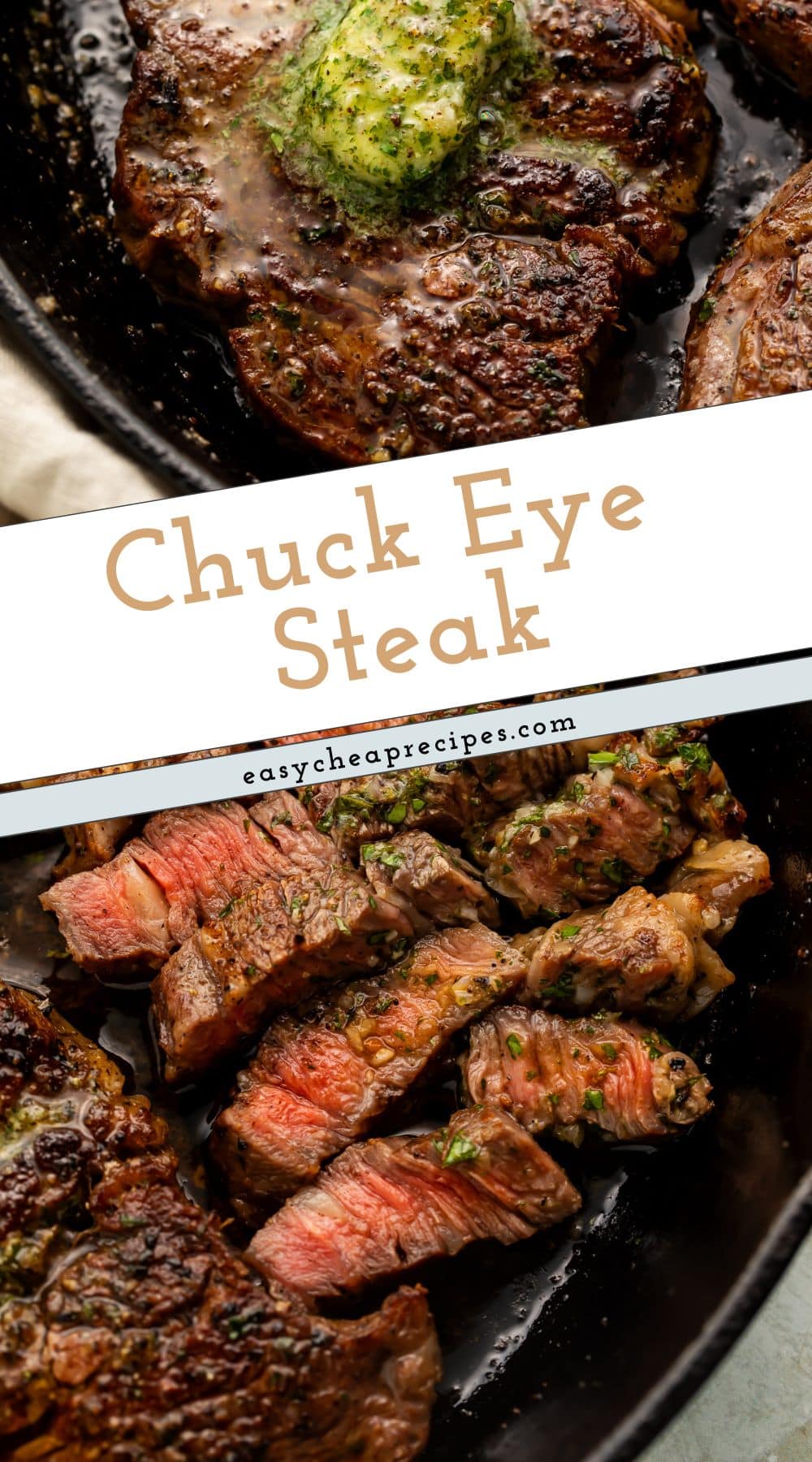
Once you’ve made this recipe for this reverse-seared Chuck Eye Steak with a homemade garlic and herb compound butter, you’ll never cook this affordable cut of steak any other way! Poor Man’s Ribeye may be lighter on your budget, but still packs in a massive amount of flavor perfect for a special occasion or a Friday night treat!
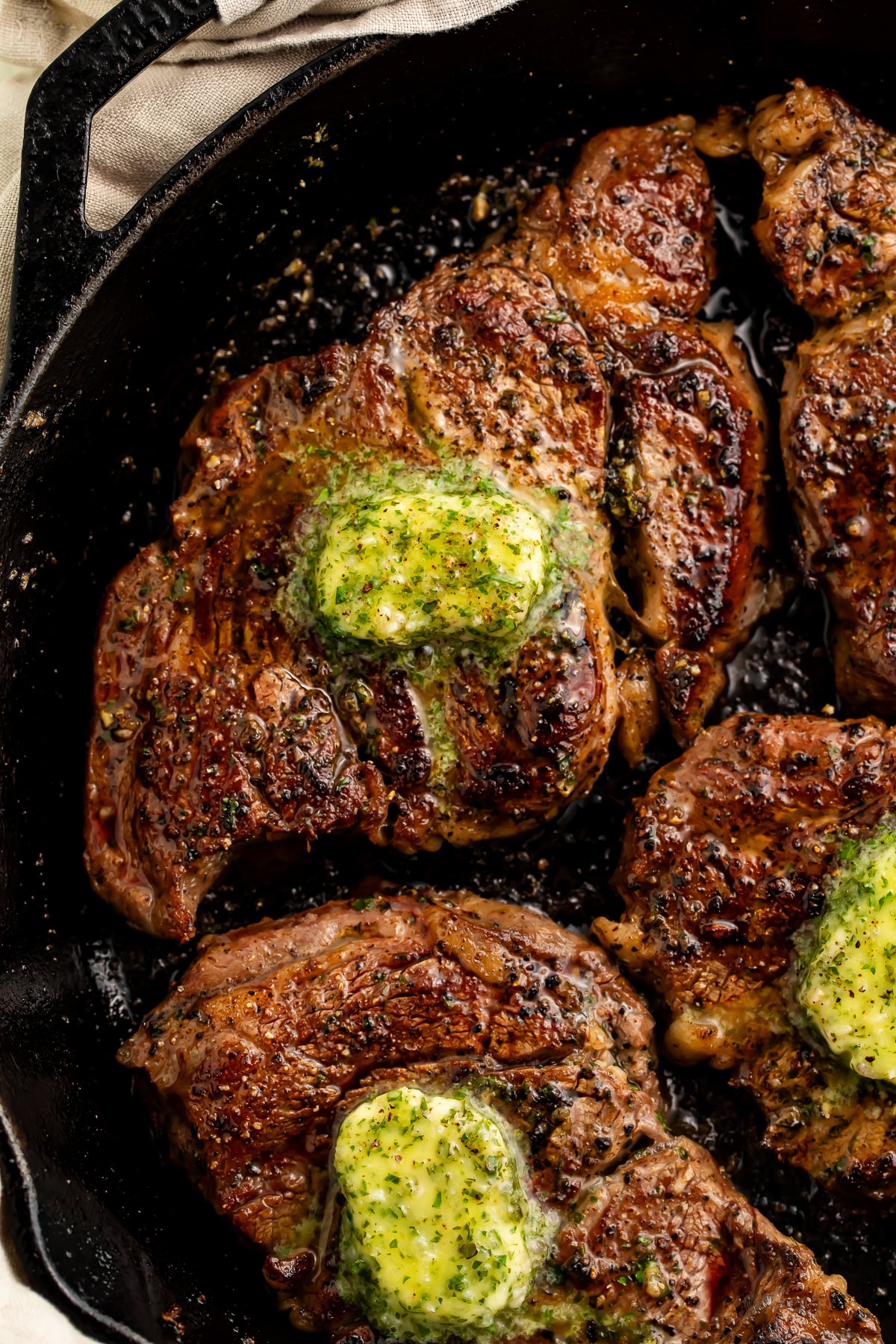
What Makes This Recipe So Good
- Chuck Eye is a much more affordable piece of steak than a luxurious rib eye, but cooked correctly still yields that same delicious flavor and perfectly cooked, tender meat!
- We’ve paired this steak dish with a super-easy garlic and herb compound butter for maximum flavor, but you can simply serve them with regular butter to save time. You could also change the flavors up with different flavors of butter.
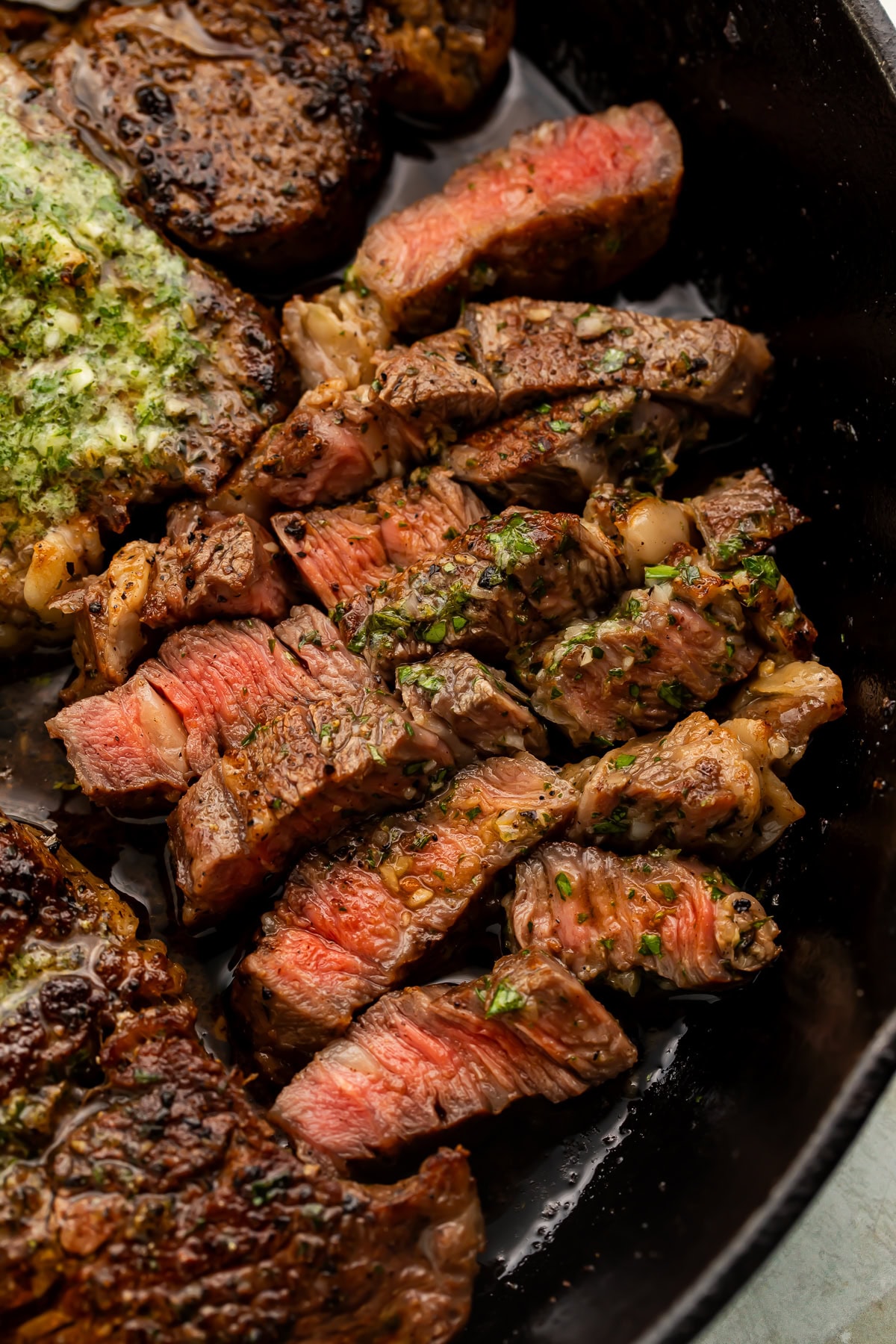
- By reverse searing the steak (cooking it in the oven first and then finishing it in the pan) you’ll get a perfectly cooked steak every single time!
Chef’s Tips
- Reverse-sear steak cooking temperatures: 120F for rare, 130F for medium-rare, 140F for medium, 150F for medium-well, and 160F for well-done.
- Complete your at-home steak night with our Smoked Sweet Potatoes and a side of Texas Roadhouse Green Beans!
More Delicious Dinner Ideas
- Smothered Turkey Wings Recipe
- Hot Dog Soup Recipe with Potatoes
- Chicken Almondine Recipe
- Easy Rice and Gravy Recipe
- Stuffed Pasta Shells with Ground Beef
- Easy Breaded Air Fryer Chicken Katsu
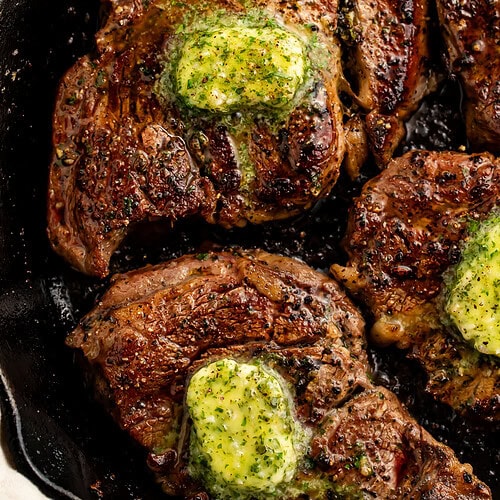
Poor Man’s Rib Eye (Chuck Steak) with Garlic Herb Butter
Equipment
- food processor (or mini chopper, for making the compound butter)
- plastic wrap (or baking parchment)
- baking sheet
- probe thermometer (optional, but recommended for perfect steaks)
- cast iron skillet
Ingredients
- 4 x 6 oz Chuck eye steaks
- Plenty of salt & fresh cracked black pepper
- Compound butter (OR 1/4 cup butter, cut into 4 equal pats)
Compound Butter
- ½ cup unsalted butter (softened)
- ¼ cup fresh parsley (roughly chopped)
- 1-1 ½ teaspoon garlic (roughly chopped)
- 2 tablespoons shallot (roughly chopped)
- 1 tablespoon fresh lemon juice
- ½ teaspoon salt
- freshly cracked black pepper (to taste)

Instructions
- Pat the steaks dry and season both sides liberally with salt and freshly ground black pepper. Let them sit at room temperature about 30 minutes, or refrigerate up to overnight. This dries out the exterior and draws the salt into the steak, making it super flavorful and juicy.
- While the steaks stand, make the garlic-herb compound butter. Place all ingredients in a food processor and process until smooth. Spoon onto a piece of plastic wrap or baking parchment, and roll into a log shape. Chill until firm.
- Preheat the oven to 250º F. Place the steaks on a baking sheet. If using oven-safe meat thermometer with probe, insert now. Cook in the oven until the internal temperature reaches the desired degree based on the time chart in the recipe notes. If you don’t have a thermometer, cook for 25 minutes, but I HIGHLY recommend a thermometer!
- Remove steaks from oven. Preheat a cast-iron skillet over high heat for 5 minutes while steaks rest. Pat steaks completely dry in order to get the best crust.
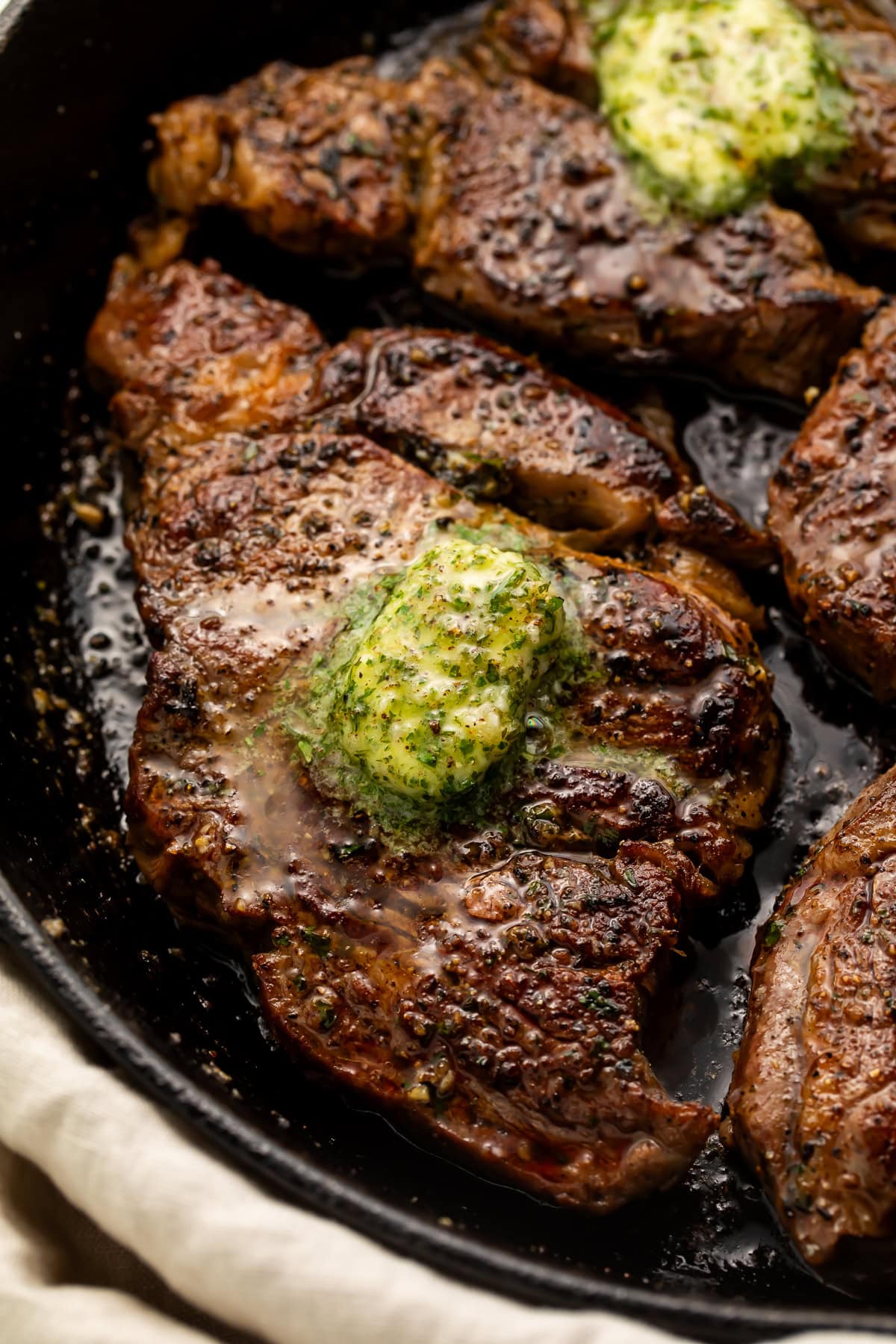
- Carefully place steaks in the hot skillet and cook 45 seconds; flip and place a pat of garlic herb compound butter (about 1 tablespoon per steak – if you didn’t make the compound butter, just use regular butter) on top of the filet. Cook another 45 seconds, then flip once or twice as needed until steaks are a richer brown color, about 20-40 seconds total. Press the sides of the filet up against the sides of the cast iron skillet briefly until no longer red or pink.
Notes
Recipe costs provided are approximate. Actual cost per recipe & serving will vary by location, store, brand, etc. Approximate cost shown does not include costs for any optional ingredients.
Nutrition
Nutrition Disclaimer
Number of total servings shown is approximate. Actual number of servings will depend on your preferred portion sizes. Nutritional values shown are general guidelines and reflect information for 1 serving using the ingredients listed, not including any optional ingredients. Actual macros may vary slightly depending on specific brands and types of ingredients used. To determine the weight of one serving, prepare the recipe as instructed. Weigh the finished recipe, then divide the weight of the finished recipe (not including the weight of the container the food is in) by the desired number of servings. Result will be the weight of one serving.